
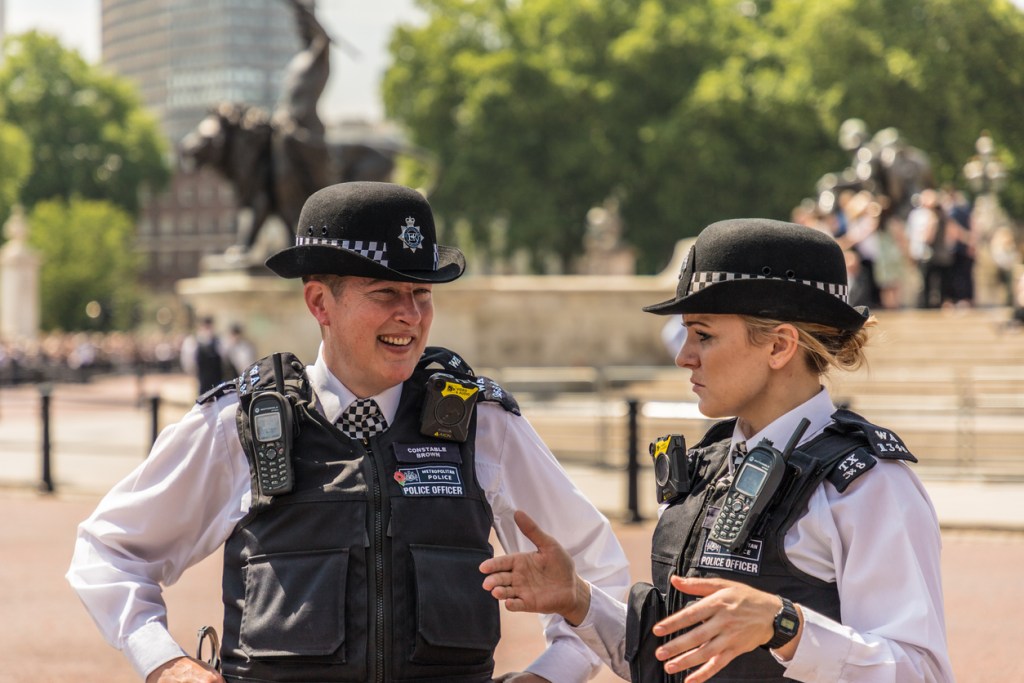
How prevalent is sexual harassment in the UK’s police force? And how targets can better protect themselves. My comment below in bold italics
Sexual harassment among police personnel: Insights from a Birmingham, UK cross-sectional survey Lati Mags and Barak Ariel Oxford Academic, 20th April 2024. Full article: https://tinyurl.com/2ankcy9f
“Sexism and misogyny, which go hand-in-hand with sexual harassment of women in the police, were recently underscored by Casey (2023) an independent review of the standard of behaviours and internal culture of the Metropolitan Police Service. The review concluded the following (p. 258):
‘Sarah Everard’s murder and other horrific crimes perpetrated by serving Met officers against women in London have shone a light on shocking treatment of and attitudes towards women in the Met. Despite improvements in gender representation and increasingly flexible working practices, women are not treated equally in the workforce, with new women recruits resigning at four times the rate of all probationers; and a third of Met women we surveyed reporting personally experiencing sexism at work, with 12% reporting directly experiencing sexual harassment or assault. Despite signs of success in the volunteer-led Signa project, women in the Met are still reluctant to speak out for fear of the consequences on their working life and career...'”
The Casey report was intended to mark a watershed moment; however, the findings from the authors’ survey and their reviews of other relevant research surveys show that there is still a long way to go.
The authors review other relevant research:
- ” The ‘vulnerable victim model’ (De Coster et al., 1999; Taylor et al.,2022)… the characteristics that make specific individuals more susceptible to becoming victims of crime due to perceived vulnerabilities—for example, low-ranked officers or socially excluded individuals… This model suggests that harassers target individuals who appear more vulnerable or less likely to retaliate or report the harassment…(Chamberlain et al.,2008; Taylor et al., 2022) proposes that some men feel threatened by women who deviate from traditionally female roles to traditionally masculine roles (De Coster et al., 1999). Several studies found that senior officers prey on lower-ranking officers with less job tenure.
- The dynamics of sexual harassment can be explained through the lens of power-threat theories, suggesting that women in authority may be targets of harassment that serves as an ‘equalizer’ against women in power (see McLaughlin et al., 2012), intended to undermine women’s authority.
- Finally, policing culture could explain why internal sexual harassment is underreported. (Lonsway et al. (2008)and others emphasize the significance of considering cultural and structural factors…The police profession is often described as aggressive, competitive, and predominantly masculine (Brown et al,. 2018). Consequently, these types of organizational norms could downplay the need to deal with sexual harassment, as if ‘tough guys’ can endure the banter and the occasional insult by colleagues. However, we note that attributing non-reporting solely to policing culture is problematic because it oversimplifies…”
Whilst more research is needed on the effects of sexual harassment on the target, it’s not difficult to imagine that targets waiting for the next onslaught are hardly capable of performing at their best, if at all.
“Factors that discourage employees from challenging internal sexual harassment
The blue code of silence
The ‘blue code of silence’ theory suggests police employees hesitate to report misconduct due to fear of retaliation or loyalty to wrongdoers (Westmarland and Conway, 2020; Maher, 2003; Westmarland and Wieslander, 2019). Policing’s strong camaraderie fosters trust among officers (Alexander et al., 2012; Archer, 1999), which can boost motivation but also discourage reporting (Graeff and Kleinewiese, 2020; Kleinewiese, 2022). Kappeler et al. (2001) and Punch (2000) note officers backing each other up and avoiding ‘ratting’ on each other, maintaining collegial loyalty (Demirkol and Nalla, 2020), and averting isolation and retaliation (Karaca, 2013; Lonsway et al., 2013) to avoid troublemaker labels (Holgersson, 2019). Similarly, witnesses may not intervene in sexual harassment incidents as a result of shifting responsibility onto the victims themselves (Sweeting et al., 2022).
From the authors’ survey
…The rate of victimization for females (42.5%) is nearly five times greater than for males (8.3%).
…Within the group of participants who reported being victimized or who witnessed internal sexual harassment, we detected substantial repeated victimization… more than 60.9% of female officers reported three or more physical incidents of harassment.“
Every time someone is bullied and harassed, they become more visible and more vulnerable to the next predator: psychologically, “Every contact leaves a trace.”
“Constables are the most at risk of being serially victimized both physically and verbally...
Nearly half of the police staff who experienced victimization felt anxiety, stress, and feelings of frustration at even greater rates. A third considered changing professional roles, and one out of four expressed a desire to leave the organization…
Those who would not challenge the behaviour are discouraged because
(a) they do not want to be labelled as a troublemaker, (b) they do not think the behaviour is severe enough to challenge, (c) they find challenging sexual harassment too stressful, (d) they do not know whom to speak to initially or what the complaints procedure entails and the available outcomes, (e) they do not feel it is their place to challenge sexual harassment if it is not directed towards them, and (f) they would not want to jeopardize the perpetrator’s career. In addition, employees with lower job tenure lack the confidence to challenge sexual harassment, especially when the perpetrator is a higher-ranking employee.
Policy considerations (as expressed by the participants)
Over 45.7% of Birmingham LPA employees want the force to provide enhanced training that clearly explains what sexual harassment means, its effects on individuals, and how employees can challenge it when it occurs. Respondents expressed that the current training tools, such as online self-taught learning packages, are ‘ineffective’.
Interestingly, 43.9% of Birmingham LPA employees think the force should provide an option for the parties to engage in restorative justice conferencing. More than half of all employees reported that the force needs to implement a proactive and rigorous complaints policy that will be enforced and taken seriously. Finally, 70.6% of respondents wanted to be reassured that the organization would protect them and their identities during the complaint process.
Still, when more than 60% of female officers who experience physical sexual harassment are subjected to so many incidents, there is a clear need for interventions.
The interplay between individual vulnerabilities, power dynamics, and organizational culture suggests a multifaceted phenomenon that cannot be sufficiently explained by any model alone. Thus, our research advocates for a more integrated approach, combining elements of the different theories to develop a more comprehensive understanding of sexual harassment in policing contexts. This integrated perspective necessitates further empirical exploration to discern these factors’ relative influence and interrelation, guiding future interventions and policy reforms.”
This survey recommends effective sexual harassment training, stressing an understanding of the impact, “Call it out” peer pressure campaigns, restorative justice rather than “Words of Advice,” protection for those putting in grievances, and the complete buy-in of The Chief Constables’ Council.
In the meantime, I can help. From 28 years working for the BBC, I learned that sexual harassers groom. In a FREE online workshop on Thursday 4th September at 7pm I’ll teach you to recognise all the grooming methods harassers use to manipulate their target and help you construct effective responses that stop them dead in their tracks: https://tinyurl.com/2bbtavjb
